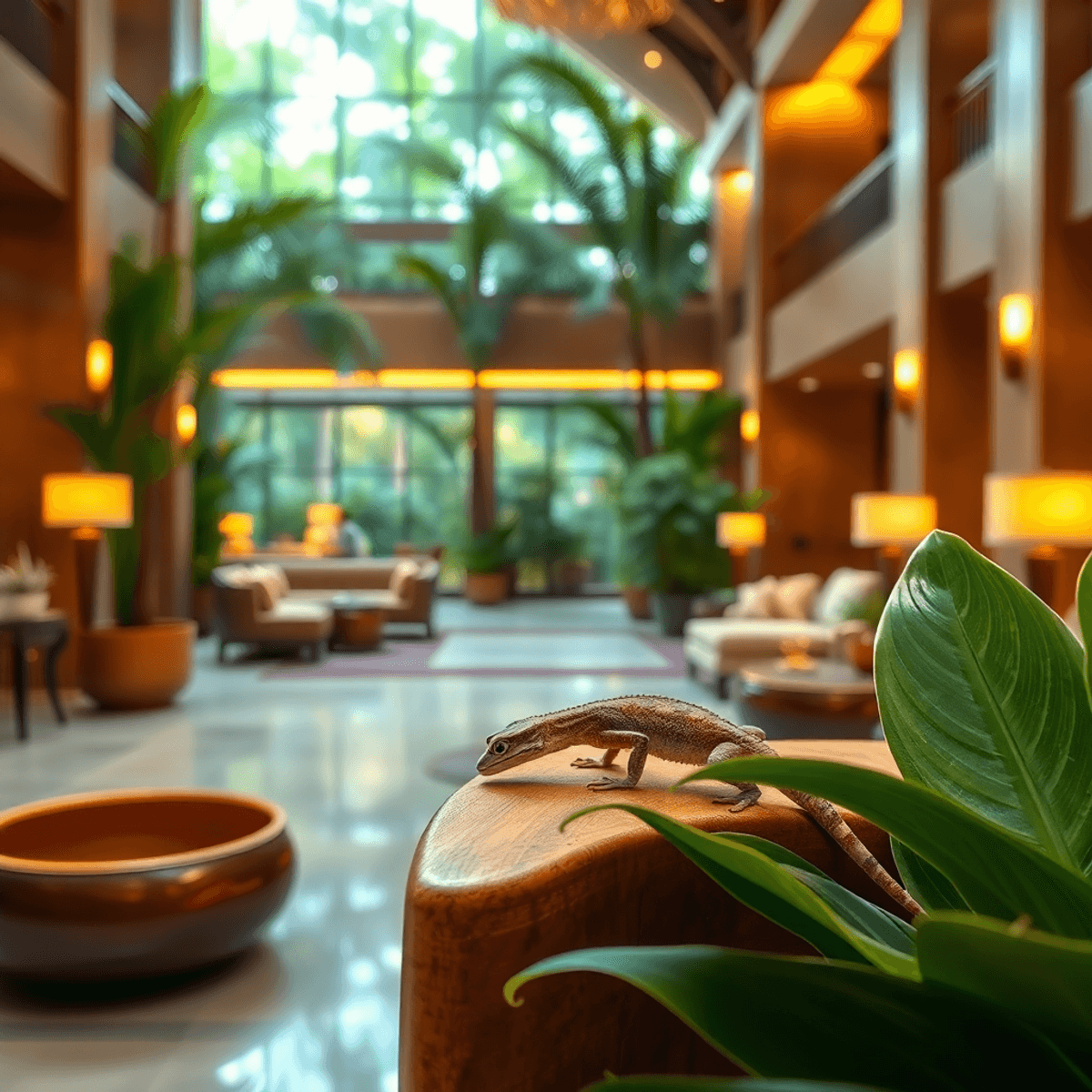
If you have traveled through Southeast Asia, chances are high that you have seen many geckos in 5 star hotel lobby areas. These small, nimble creatures are a familiar sight in hotel lobbies across the region. Known scientifically as Hemidactylus frenatus, the common house gecko has become almost synonymous with indoor spaces in tropical Asia. Their presence is so widespread that encountering them feels like part of the authentic Southeast Asian hospitality experience.
This article explores the fascinating relationship between these adaptable reptiles and hotel environments. You will learn about:
- The biological identity of the common house gecko and how to recognize it.
- The reasons why hotel lobbies in Southeast Asia provide an ideal habitat for these lizards.
- How their diet and behavior fit perfectly within the indoor ecosystem of hotels.
- The ecological benefits they bring by naturally controlling insect populations.
- Challenges hoteliers face due to their presence and ways to coexist harmoniously.
By understanding why these little creatures thrive in such settings, you gain insight into an often overlooked but important part of hotel life in Asia. This guide invites you to see beyond mere sightings and appreciate the role of the common house gecko in bustling hotels throughout South East Asia.
Interestingly, while these geckos are a common sight, it's not just their presence that makes a holiday memorable. Sometimes, even our voices can play a significant role in shaping our travel experiences. Changing your voice on holiday can offer a fun twist to your interactions, making each encounter more enjoyable and unique.
Meet the Common House Gecko: Nature's Hotel Lobby Resident
The common house gecko you often spot in hotel lobbies belongs to the species Hemidactylus frenatus. This small reptile is part of the Gekkonidae family, a diverse group known for their adhesive toe pads that enable them to climb smooth vertical surfaces and even ceilings effortlessly. Native to Southeast Asia, Hemidactylus frenatus has spread widely due to its adaptability to human environments.
Different Names and Regional Variants
You might hear this gecko called by various names depending on where you are:
- Asian house gecko
- Brown house lizard
- Simply the common gecko
- In some regions, locals refer to it as the common house lizard
Despite slight variations in appearance across regions, these names generally point to the same adaptable species commonly found in urban settings, especially buildings like hotels.
Size and Identifying Features
The common house gecko size typically ranges from 7.5 to 15 centimeters (3 to 6 inches) including the tail. Key physical characteristics include:
- A slender body with translucent skin that often appears pale cream or light brown.
- Small tubercles (tiny bumps) scattered over their back giving a rough texture.
- Large, lidless eyes with vertical pupils — perfect for their nocturnal lifestyle.
- Toes equipped with specialized pads that secrete a sticky substance, allowing them to cling securely to walls and ceilings.
These geckos have a distinctive chirping or clicking sound, which is uncommon among most lizards but recognizable once you’re familiar with it.
Their presence in buildings is so common that gecko houses—small shelters designed for them—are sometimes installed intentionally in Southeast Asian homes and businesses because of their insect control benefits.
Understanding these basic facts about the common house gecko helps recognize why they are such successful residents of hotel environments across tropical Asia.
Why Are Geckos Commonly Found in Hotel Lobbies?
The common house gecko usually lives in places like forests, rocky areas, and on tree bark. But these adaptable reptiles have started to make their homes in urban areas, especially in tropical regions such as Southeast Asia. Cities offer new opportunities for survival, often replacing natural habitats with man-made structures that provide similar living conditions.
Reasons Why Geckos Are Drawn to Hotel Lobbies
Hotel lobbies and buildings attract these geckos for several key reasons:
- Abundance of Food: Hotels often have bright lights that attract a variety of insects—mosquitoes, flies, moths—which serve as easy prey for geckos.
- Shelter and Safety: The architecture of hotels offers numerous nooks, crevices, and ledges perfect for hiding during the day and safe resting spots.
- Stable Microclimate: Indoor environments buffer extreme weather changes, providing a consistent temperature and humidity level favorable to gecko activity.
The Impact of Tropical Climates on Geckos Indoors
Understanding why these geckos thrive indoors requires considering the role of tropical climates. Southeast Asia’s warm and humid conditions create an ideal backdrop where moisture levels remain high, supporting insect populations year-round. This climate ensures that indoor spaces maintain the warmth and humidity geckos need to stay active and reproduce successfully.
Key factors about tropical climates affecting common house gecko habitat indoors include:
- Warm temperatures that prevent seasonal dormancy.
- High humidity that supports skin health and prevents dehydration.
- Continuous insect activity feeding the gecko population without interruption.
How Hotels Provide an Ideal Habitat for Geckos
Indoor environments in hotels replicate many aspects of the natural tropical habitat but with added benefits such as protection from predators and fewer environmental fluctuations. These factors combine to make hotel lobbies some of the most attractive locations for common house geckos in Southeast Asia.
Why Hotel Lobbies are the Perfect Dining Spot for Common House Geckos
Hotel lobbies are a great place for common house geckos to find food. These areas have bright artificial lights that attract insects, which are the main source of food for geckos. I've seen many geckos in fancy hotel lobbies in Southeast Asia quietly hunting near lamps and brightly lit plants, patiently waiting for a meal to come by.
Here are a few reasons why hotel lobbies are so appealing:
- Plenty of Insects: The warm weather and artificial lights create an environment where insects thrive, especially at night due to their attraction to light. This means there's always a reliable supply of food for geckos.
- Hiding Places: Hotel architecture often includes features like decorative beams, ceiling moldings, potted plants, and furniture. These provide perfect hiding spots for geckos during the day when they need to rest or avoid predators.
- Easy Access to Walls and Ceilings: Geckos have special toe pads that allow them to climb effortlessly on vertical surfaces and ceilings. Hotel lobbies usually have smooth walls and high ceilings, making it easy for geckos to move around.
The design of these buildings often includes small spaces like ledges, ventilation grilles, and crevices where geckos can hide but still be close to their feeding areas. Geckos are most active at night when insects are also moving around attracted by the lobby lights.
Many hotel guests might not notice these quiet visitors right away because geckos blend in well with their surroundings and are very silent. But for common house geckos, hotel lobbies are like restaurants with unlimited insect buffets and cozy hiding spots—allowing them to thrive peacefully in urban environments.
A Gourmet Feast: The Common House Gecko's Diet in Hotel Environments
The common house gecko diet primarily consists of a variety of insects that thrive in indoor hotel environments. These geckos are opportunistic feeders, capitalizing on the abundance of small flying and crawling pests attracted by artificial lighting and human activity.
Typical Foods in Their Diet
- Mosquitoes: One of the most common prey items, mosquitoes provide a steady and easy food source. This makes geckos valuable in reducing mosquito populations indoors.
- Flies: House flies and other small dipterans are frequently caught by geckos darting across walls and ceilings.
- Moths: Attracted by bright lights, moths become an accessible meal during nighttime hours.
- Ants and Beetles: Small crawling insects also form part of their varied diet.
- Other Pests: Spiders, cockroaches, and other nocturnal arthropods may occasionally be consumed.
Their feeding habits directly contribute to insect control within hotels. By preying on these common pests, geckos help reduce the nuisance and potential health risks posed by insects indoors. This natural pest control reduces reliance on chemical insecticides, which can be harmful to both humans and the environment.
Feeding Behavior Adapted to Hotel Settings
Common house geckos are mostly nocturnal hunters. They take advantage of the insect activity that peaks at night when hotel lights attract swarms of bugs. Geckos move swiftly along ceilings and walls, using their specialized toe pads to cling to smooth surfaces as they stalk prey.
They exhibit a sit-and-wait hunting strategy combined with quick bursts of movement to capture insects. This method is energy-efficient and effective in environments where prey congregates near light sources.
Ecological Impact Inside Hotels
The presence of common house geckos contributes positively to maintaining a balance between insect populations and indoor comfort levels for guests. By naturally controlling mosquitoes and flies, these lizards reduce biting insect encounters and potential disease transmission vectors.
Hotels benefit from this ecological service since it lessens the need for excessive pest control measures while enhancing guest satisfaction through fewer flying insect disturbances.
Understanding the common house gecko food preferences highlights why these creatures thrive in hotel lobbies—abundant prey availability combined with favorable microhabitats ensures a continuous gourmet feast for them throughout the year.
Nature's Pest Control: The Ecological Role of Common House Geckos in Hotels
The common house gecko plays a significant role in insect control within hotel environments. Their presence directly impacts the population of insects, many of which are considered pests by humans. By feeding on mosquitoes, flies, moths, cockroaches, and other small insects, geckos naturally reduce the number of these nuisances indoors. This predation helps maintain a balance in the indoor ecosystem that benefits both guests and hotel staff.
How Geckos Contribute to Natural Pest Control
Geckos contribute to natural pest control through their:
- Predator-prey relationship: Geckos serve as natural predators to various flying and crawling insects frequently found in hotels.
- Targeting common pests: Their diet focuses on insects that can spread diseases or cause discomfort, such as mosquitoes and flies.
- Continuous activity: Being nocturnal hunters, geckos remain active when many insects are most abundant, providing pest control during nighttime hours when human efforts are minimal.
Benefits for Hotels in Reducing Insect Nuisances
Hotels often face challenges with insect infestations due to open doors, food service areas, and tropical climates encouraging insect breeding. Geckos help by:
- Lowering the need for chemical pesticides: With geckos controlling insect numbers naturally, hotels can reduce reliance on sprays and traps that may affect guest comfort or health.
- Enhancing guest experience: Fewer flying insects mean less annoyance for guests during their stay.
- Maintaining hygiene standards: Controlling insect populations aids in keeping public areas cleaner and reduces the risk of disease transmission.
Geckos integrate seamlessly into the indoor environment without causing harm. Their silent hunting methods and discreet presence make them an efficient form of natural pest control inside hotel lobbies and rooms. This ecological role is invaluable in tropical regions where insect pressure is high year-round.
Hotels benefit from this symbiotic relationship by enjoying reduced insect problems without compromising safety or guest satisfaction. Understanding the ecological function of common house geckos allows hoteliers to appreciate their presence beyond the occasional nuisance they might pose.
The Ups and Downs of Having Geckos as Hotel Lobby Guests: Challenges Faced by Hoteliers with Common House Geckos Around
Encountering common house geckos in hotel lobbies is a frequent experience for travelers in Southeast Asia. I have seen many geckos in 5-star hotel lobbies in South East Asia, which highlights their widespread presence. Despite their beneficial role, several nuisance factors affect both hoteliers and guests.
Visual Impact of Droppings on Walls and Surfaces
One of the most noticeable downsides is the presence of small droppings left behind by geckos. These droppings often accumulate on walls, ceilings, furniture, and other surfaces within hotel lobbies. Although tiny, they can create a visual disturbance that detracts from the polished look hotels strive to maintain.
- Droppings appear as dark spots or streaks.
- Cleaning staff must dedicate extra effort to keep these areas spotless.
- Stains may remain if not cleaned promptly, potentially affecting guest perceptions of hygiene.
This visual impact is particularly sensitive in upscale hotels where aesthetic standards are high. Even though the gecko droppings are harmless, they can cause frustration among management striving for immaculate environments.
Distinctive Sounds That May Annoy Guests
Geckos produce characteristic chirping or clicking sounds, especially at night or during quiet hours. The vocalizations vary but often include repetitive clicks or soft barks that can be heard echoing through lobbies and hallways.
- Some guests find these sounds intriguing or even charming.
- Others perceive them as disruptive or irritating, especially light sleepers.
- Noise complaints occasionally arise due to persistent gecko calls.
The acoustic presence of geckos becomes more apparent in quieter settings such as early mornings or late evenings when ambient noise levels drop. Hotels located in tropical climates with abundant gecko populations tend to receive more feedback about these sounds.
Balancing Benefits with Nuisance Factors
While you benefit from natural pest control provided by geckos, it’s important to recognize the challenges they bring into hospitality spaces. Hoteliers face a delicate balancing act—preserving ecological advantages without compromising guest comfort and aesthetic standards.
Addressing these nuisance factors requires thoughtful management strategies that reduce visible droppings and minimize noise impact without harming the resident gecko population. This approach supports coexistence while maintaining a welcoming atmosphere for visitors.
Interestingly, the perception of these creatures varies among different cultures. For instance, Trinidadians reflect on their lizards with a sense of familiarity and acceptance. In some instances, hotel managers have even started to embrace the presence of these reptiles, recognizing their potential as a unique aspect of the hotel's character.
Survival Skills: How Common House Geckos Adapt to Indoor Environments in Hotels
The common house gecko's success in hotel lobbies largely depends on its remarkable climbing ability. Equipped with specialized toe pads covered in microscopic hair-like structures called setae, these geckos can cling effortlessly to almost any surface. This includes vertical walls, smooth glass, and even ceilings where many insects are active. Their feet act like natural suction cups, allowing them to move quickly and stealthily in search of prey or shelter.
This climbing skill provides access to a wide range of microhabitats within the hotel environment:
- Corners near light fixtures where insects gather
- Ceiling edges and beams offering safety from larger predators
- Cracks and crevices for hiding during the day
Their ability to navigate complex indoor spaces opens up numerous opportunities for feeding and protection unavailable to less agile species.
Nocturnal behavior is another crucial survival trait. Common house geckos are primarily active at night when most of their insect prey, such as mosquitoes and moths, emerge. Hotel lobbies often have artificial lighting that attracts these insects after sunset, creating a rich feeding ground perfectly timed with the gecko's activity patterns.
Key aspects of their nocturnal lifestyle include:
- Hunting under low light conditions using keen vision adapted for night
- Avoiding human disturbance by being less active during busy daytime hours
- Synchronizing feeding times with peak insect availability around lamps and electronic devices
This temporal niche reduces competition from other insectivores that prefer daylight hunting while maximizing food intake.
Together, climbing prowess and nocturnal habits enable the common house gecko to thrive indoors where insect populations concentrate near light sources. These adaptations ensure they exploit hotel environments efficiently without requiring large outdoor territories or risking exposure to daytime threats.
Diversity Among the House Lizards: Other Species Found in Southeast Asian Hotels Alongside the Common House Gecko
When exploring house lizard types in Southeast Asia, the common house gecko (Hemidactylus frenatus) often takes center stage. However, it shares indoor habitats with several other species of asian geckos and asian house lizards that adapt equally well to hotel environments.
Key species frequently spotted alongside the common house gecko include:
- Asian House Gecko (Hemidactylus platyurus)
- This species is recognizable by its flattened tail and slender body. It prefers slightly different microhabitats, often found near windows or in more open areas indoors.
- Four-clawed Gecko (Gehyra mutilata)
- Distinguished by having four claws instead of five on each foot, this gecko can be seen on walls but tends to be more secretive and less vocal than H. frenatus.
- Lined House Gecko (Hemidactylus bowringii)
- Sporting faint longitudinal stripes, this gecko is slightly larger and favors crevices or behind fixtures within hotel interiors.
These species contribute to the rich biodiversity of hotel lizards and share similar habits such as nocturnal activity and insectivorous diets. Their coexistence creates a small but complex ecosystem inside buildings, where each lizard species occupies specific niches or microhabitats.
Understanding these various house lizard types helps explain why you might see different shapes, sizes, and behaviors among geckos in Southeast Asian hotels. Each species adds to the natural pest control system while adapting uniquely to human-made environments.
The Market for Common House Geckos: Exploring Availability and Trade Outside Their Natural Habitat
The common house gecko has gained popularity beyond its natural environment, especially among reptile enthusiasts and collectors. You might have noticed many geckos in 5-star hotel lobbies across Southeast Asia, but some people take a different interest in these creatures by seeking them as pets or exotic curiosities.
Popularity as Pets and Curiosities
There are several reasons why common house geckos are becoming popular as pets and curiosities:
- Ease of care: Their small size and low maintenance requirements make them attractive to beginners in the reptile hobby.
- Non-aggressive behavior: They are harmless and rarely bite, which adds to their appeal.
- Unique appearance: Their translucent skin and quick movements often fascinate pet owners looking for something different.
Market Demand and Pricing Considerations
Several factors indicate the market demand and pricing considerations for common house geckos:
- The search term common house gecko for sale frequently appears on reptile trade websites, indicating steady demand.
- Prices vary depending on factors such as age, coloration, and source (wild-caught vs. captive-bred).
- Typically, the common house gecko price is affordable compared to more exotic lizards, ranging from $5 to $20 per individual.
- Ethical concerns arise regarding wild capture versus breeding programs; responsible sellers prioritize captive breeding to protect native populations.
This trade exists both locally in Southeast Asia and internationally, with some enthusiasts importing these geckos due to their unique traits. Despite being common in hotel lobbies and urban areas, the market for these small reptiles continues to thrive quietly among collectors.
Coexisting with Nature: Managing Gecko Presence in Hotels Without Harmful Measures
Hotels aiming for humane pest control prioritize strategies that reduce gecko disturbance without causing harm. These methods respect the ecological role of geckos while maintaining guest comfort.
Common non-lethal approaches include:
- Habitat modification: Reducing clutter and sealing cracks limits hiding spots, encouraging geckos to relocate naturally.
- Lighting adjustments: Using yellow or sodium vapor lights instead of bright white LEDs decreases insect attraction, indirectly reducing gecko food sources.
- Physical barriers: Installing fine mesh screens on windows and vents prevents geckos from entering sensitive areas.
- Gentle deterrents: Placing natural repellents like garlic or pepper near entry points can discourage gecko presence without toxicity.
Staff training plays a role in humane management. Educating hotel personnel to avoid harmful chemicals or traps ensures geckos are handled carefully when encountered. Some hotels provide designated zones where geckos can thrive away from high-traffic guest areas.
This balance between minimizing nuisance and preserving biodiversity demonstrates practical coexistence. Guests often appreciate knowing that hotels adopt environmentally conscious measures rather than resorting to extermination. Such humane pest control practices reflect a growing trend toward sustainable hospitality management in tropical regions where common house geckos are frequent residents.
For more information on humane pest control, you can visit this resource.
Conclusion
The common house gecko thrives in hotel lobbies because of specific environmental factors that perfectly suit its needs:
- Warm, humid tropical climates provide ideal living conditions.
- Artificial lighting attracts a steady supply of insects, serving as abundant food.
- Building structures offer plenty of hiding spots and easy access to ceilings and walls.
I have seen many geckos in 5 star hotel lobby in South East Asia, a clear example of how these reptiles have adapted to urban life. Their presence helps keep insect populations under control, which benefits both hotels and their guests by reducing pests naturally.
Challenges remain for hoteliers managing gecko guests. Their droppings can affect cleanliness, and the distinctive sounds they make may disturb some visitors. Balancing these issues requires thoughtful strategies that respect both the animal's ecological role and guest comfort.
Embracing a balanced coexistence means:
- Recognizing the ecological benefits geckos provide.
- Implementing non-harmful management techniques.
- Accepting their presence as part of the tropical hotel experience.
This approach promotes harmony between humans and nature, making hotel stays more authentic while maintaining comfort and cleanliness standards.
FAQs (Frequently Asked Questions)
What is the common house gecko and why is it frequently seen in hotel lobbies in Southeast Asia?
The common house gecko, scientifically known as Hemidactylus frenatus, is a small lizard species widely found in tropical climates like Southeast Asia. It thrives in hotel lobbies due to the warm, humid indoor environment, abundant insect prey attracted by artificial lighting, and ample shelter provided by building structures.
How does the common house gecko contribute to natural pest control in hotels?
Common house geckos feed on mosquitoes, flies, and other indoor pests commonly found around hotel lobbies. By preying on these insects, they naturally reduce insect populations, providing an ecological benefit that helps hotels minimize nuisances without relying solely on chemical pest control methods.
What challenges do hoteliers face with the presence of common house geckos in their lobbies?
While geckos aid in insect control, they can present challenges such as leaving droppings on walls and surfaces that affect visual cleanliness. Additionally, their distinctive sounds may annoy some guests. Managing these issues requires balancing guest comfort with ecological benefits.
How do common house geckos adapt to indoor environments like hotel lobbies?
Common house geckos possess excellent climbing abilities that allow them to cling to vertical surfaces and ceilings easily. They are nocturnal, aligning their activity patterns with peak insect availability at night. These adaptations enable them to thrive indoors where food and shelter are plentiful.
Are there other lizard species commonly found alongside the common house gecko in Southeast Asian hotels?
Yes, besides Hemidactylus frenatus, several other house lizard species such as various Asian geckos and Asian house lizards coexist within indoor environments of Southeast Asian hotels. These species similarly exploit the favorable conditions of warmth, shelter, and food availability.
What humane strategies do hotels use to manage the presence of common house geckos without harming them?
Hotels often employ non-lethal measures such as minimizing insect-attracting lighting during certain hours, sealing entry points to restrict excessive gecko movement into guest areas, and maintaining cleanliness to reduce droppings visibility. These strategies aim for a balanced coexistence respecting both ecological roles and guest comfort.


Comments
Post a Comment