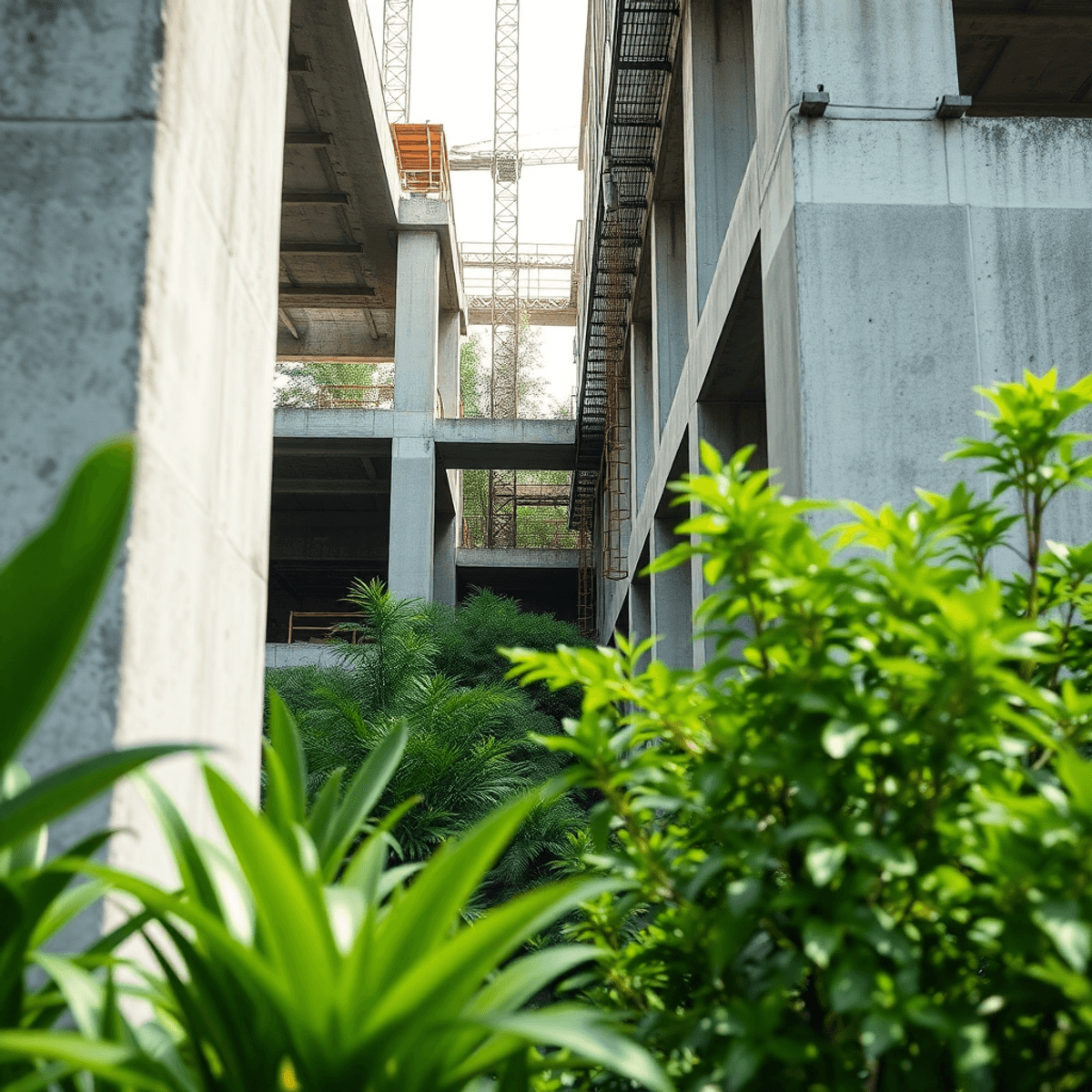
Concrete is the foundation of modern infrastructure, shaping cities and connecting communities. However, this widely used material has a significant negative impact on the environment. Traditional concrete production is responsible for nearly 8% of global carbon emissions, mainly due to the energy-intensive process of making cement and the release of CO₂ during limestone processing.
Why does this matter?
- High carbon emissions contribute significantly to climate change.
- The increasing demand for concrete puts more pressure on the environment.
- There is an urgent need to reduce carbon emissions from construction materials in line with global sustainability goals.
The future of low content score is here: low carbon concrete technology explained. This emerging field is changing our perspective on "carbon to concrete," providing innovative solutions that greatly lower emissions without sacrificing performance.
Low carbon concrete combines advanced materials and methods to reduce embodied carbon — the total greenhouse gases released during the extraction, production, and transportation of materials. These improvements are vital for lessening climate impact and also create opportunities for greener, more sustainable infrastructure development.
Using low carbon concrete represents a significant change in construction, where sustainability meets practicality. As industries adopt these technologies, they take the lead in moving towards a future where every building benefits the health of our planet.
Additionally, as we work towards sustainable construction practices, it's important to also focus on the digital aspect of our industry. For example, mastering SEO can greatly improve online visibility and content engagement. Knowing how to increase your content score through effective SEO techniques can make a huge difference in promoting low carbon concrete technology and other sustainable practices.
Understanding Low Carbon Concrete Technology
Low carbon concrete technology represents a transformative shift in the construction industry, targeting the significant environmental impact of traditional concrete. This innovation focuses on reducing the carbon footprint concrete leaves behind by minimizing greenhouse gas emissions during production, use, and disposal. At its core, low carbon concrete or low embodied carbon concrete aims to deliver materials that maintain structural integrity while significantly lowering their contribution to climate change.
What is Low Carbon Concrete?
Low carbon concrete is a type of cementitious material engineered to emit less CO₂ throughout its life cycle compared to conventional concrete. It encompasses formulations such as:
- Lower carbon cement blends that substitute clinker with alternative binders.
- Zero carbon concrete mixes designed to achieve net-zero emissions.
- Technologies that enable carbon concrete—concrete incorporating captured CO₂ for enhanced performance and reduced emissions.
This approach not only reduces direct emissions from production but also addresses indirect emissions related to raw materials and energy consumption.
Embodied Carbon in Traditional Concrete
Embodied carbon refers to the total greenhouse gas emissions generated during the entire lifecycle of building materials—from extraction, manufacturing, transportation, construction, maintenance to end-of-life disposal or recycling. In traditional concrete, embodied carbon primarily arises from:
- Cement Production:
- Cement manufacturing accounts for approximately 70–90% of concrete’s total embodied carbon. The main culprit is clinker, produced by heating limestone (calcium carbonate) at high temperatures—a process called calcination. This releases large amounts of CO₂ both from fuel combustion and chemical decomposition.
- Energy Consumption:
- High-temperature kilns operate mostly on fossil fuels like coal or natural gas. Energy-intensive processes contribute significantly to overall emissions.
- Raw Material Extraction & Transportation:
- Quarrying for aggregates and limestone, followed by transport logistics, add additional layers of emissions depending on distance and mode of transport.
- Concrete Mixing & Placement:
- While less impactful than cement production, these stages consume electricity and fuel that contribute marginally but notably over large-scale projects.
Key Contributors to Emissions Breakdown
Component | Approximate % Contribution to Embodied Carbon |
Clinker Production | 60-70% |
Fuel Combustion | 25-30% |
Raw Material Extraction | 5-10% |
Transportation & Logistics | 5-15% |
The challenge lies in reducing reliance on clinker without compromising strength and durability—enter innovations in low CO₂ concrete mixes such as those found in the Materials Palette's range of low carbon options.
Significance in Climate Change Mitigation
Concrete accounts for nearly 8% of global CO₂ emissions annually—making it a critical target for decarbonization efforts worldwide. Deploying low embodied carbon concrete can:
- Slash industrial greenhouse gas output.
- Encourage renewable energy integration in production.
- Support circular economy principles through recycled inputs.
- Facilitate greener urban infrastructure development aligned with net zero goals.
Innovations Driving Low Carbon Concrete Development
Low carbon cement and reduced carbon concrete are rapidly evolving fields, driven by groundbreaking materials and transformative production methods. These innovations target the heart of high emissions in traditional concrete: clinker production and cement chemistry.
Revolutionary Materials Transforming Low Carbon Cement
1. Limestone Calcined Clay Cement (LC3)
LC3 substitutes a significant portion of clinker with a blend of calcined clay and limestone. This blend lowers energy consumption by reducing the need for clinker—a major source of carbon in cement—and utilizes abundant natural resources. LC3’s manufacturing process emits up to 40-50% less CO₂ compared to ordinary Portland cement, making it a compelling choice for low emission cement production. Cementos Argos has pioneered LC3 at scale, demonstrating its feasibility in commercial applications.
2. Algae-Grown Limestone
A novel biological approach involves cultivating limestone via algae, which absorbs CO₂ during its growth phase. Incorporating algae-grown limestone into cement formulations can create ultra low carbon concrete with potentially carbon-neutral or even carbon-negative footprints. Companies like Prometheus Materials are developing masonry blocks that harness this bio-mineralization process, turning a natural carbon sink into an ingredient for durable construction materials.
Cutting-Edge Production Technologies
1. Electric Recycled Cement via Electric Arc Furnaces (EAFs)
Traditional clinker production requires massive heat from fossil fuels, but electric recycled cement leverages renewable energy-powered EAFs to heat and recycle cementitious materials. This technology drastically reduces CO₂ emissions by bypassing calcination of virgin limestone. Celsa Group’s Cement 2 Zero project exemplifies this shift, aiming to produce low CO2 cement at industrial scales by 2050.
2. Carbon Utilization Techniques: Injecting CO₂ into Concrete Mixes
CarbonCure’s innovation injects captured CO₂ directly into fresh concrete during mixing. The CO₂ mineralizes within the concrete matrix, enhancing strength while reducing the amount of Portland cement needed. This dual benefit leads to lower embodied carbon without compromising performance or increasing costs. Many concrete producers adopt this method for its environmental advantages coupled with economic incentives through verified carbon credits.
Emerging Ultra Low Carbon Concrete Solutions
Technologies such as those developed by CarbonBuilt replace high-carbon cement with low-cost alternatives that absorb CO₂ during manufacture, achieving between 70% to over 100% reductions in embodied carbon relative to conventional blocks. These advances showcase how integrating chemical capture and material innovation can redefine what “green” concrete means in practical terms.
Innovations like low carbon cement production powered by renewable energy and materials engineered to lock away carbon permanently illustrate how science and industry combine forces to tackle climate change head-on within the construction sector. Each breakthrough builds momentum toward widespread adoption of sustainable concrete solutions capable of transforming infrastructure worldwide.
Leading Low Carbon Concrete Companies and Their Technologies
The low carbon concrete industry is being reshaped by pioneering companies whose innovative technologies are setting new benchmarks for sustainability in construction. These low carbon concrete companies deliver solutions that reduce emissions without compromising on performance, advancing the adoption of greener building materials worldwide.
Cemex: Ecopact Green Concrete
Cemex stands out with its Ecopact line, a flagship product designed to significantly cut carbon emissions during production. This ecopact concrete utilizes a blend of low clinker cements and supplementary cementitious materials that lower embodied carbon while maintaining strength and durability. The company markets this as a low cement concrete option, targeting projects aiming to reduce their environmental footprint without sacrificing quality or workability.
Key Features
- Reduction in carbon footprint by up to 70% compared to traditional mixes
- Compatibility with existing construction standards and applications
- Available globally, supporting large-scale green infrastructure projects
CarbonCure has pioneered a groundbreaking approach by injecting captured carbon dioxide directly into fresh concrete during mixing. This technology not only sequesters CO₂ permanently in the concrete matrix but also improves compressive strength, allowing producers to use less cement.
Key Features
- Operates as an add-on system to conventional concrete plants
- Verified carbon reduction credits incentivize adoption
- Enhances performance while cutting down on cement usage
This innovation exemplifies how low emission concrete can be produced economically through clever integration of carbon utilization techniques.
Sublime: Electrolytic Clean Cement
Sublime pushes the boundaries further with its electrolytic cement technology, producing cement through an electrically-powered process that emits almost zero greenhouse gases. By splitting limestone using clean electricity, Sublime’s method eliminates the calcination emissions typical of traditional cement manufacturing.
Key Features
- Enables production of clean electrolytic cement at scale
- Offers potential for grid-responsive manufacturing powered by renewables
- Promises transformative impacts on the future of low content score in concrete
Fortera: Carbon Capture and Reuse
Fortera focuses on capturing CO₂ from industrial sources and utilizing it to create low-carbon cementitious products. This approach transforms waste emissions into valuable building materials that contribute to circular economy principles.
Key Features
- Uses proprietary mineralization processes for stable CO₂ incorporation
- Produces low emission concrete alternatives suitable for diverse applications
- Integrates seamlessly into existing supply chains for scalability
Brimstone: Calcium Silicate Rock Utilization
Brimstone takes a novel route by employing calcium silicate rock as a raw material. This mineral source reacts during processing to prevent CO₂ release, effectively avoiding emissions associated with limestone calcination.
Key Features
- Offers an alternative pathway to traditional clinker production
- Reduces carbon intensity without compromising material properties
- Focused on disrupting conventional cement chemistry with sustainable inputs
These companies exemplify how the future of low content score is here, driven by innovations ranging from material substitution and carbon capture to electrified production methods. Their technologies showcase diverse strategies converging toward decarbonizing one of the most emission-intensive sectors worldwide—cement and concrete production. Each approach contributes uniquely to lowering embodied carbon in construction materials, making sustainable infrastructure increasingly achievable at scale.
Case Studies on Commercial Applications and Impact
Low carbon concrete is making significant strides in the construction industry, with various projects showcasing its viability, performance, and economic appeal. Several real-world applications demonstrate how these sustainable materials are transforming infrastructure development while addressing environmental concerns.
Notable Project Highlights
1. Ecopact Concrete in Urban Developments
Cemex’s Ecopact line has been used in numerous large-scale projects worldwide, from commercial office buildings to public infrastructure. For example, a recent high-rise in London incorporated Ecopact concrete to achieve a net zero carbon concrete certification for its structural frame. This choice reduced embodied carbon by up to 30% compared to traditional mixes without sacrificing strength or workability.
The Ecopact concrete price aligns competitively with conventional concrete when factoring in lifecycle savings through improved sustainability credentials and potential regulatory incentives.
2. CarbonCure’s CO₂ Injection in Residential Construction
In Canada, CarbonCure’s technology was employed in mid-rise residential buildings where CO₂ injection into the concrete mix lowered cement content and enhanced durability. Builders reported cost savings due to less cement usage and faster curing times. These benefits translate to a favorable low carbon concrete cost profile that appeals to budget-conscious developers seeking greener alternatives. Additionally, CarbonCure’s process generates verified carbon credits, offering an extra revenue stream or offset opportunity.
3. Sublime’s Electrolytic Cement for Industrial Facilities
Sublime’s clean electrolytic cement was trialed in an industrial flooring project in California, showcasing ultra-low emissions without compromising material quality. Although still emerging commercially, the technology promises future cost parity with traditional cements as scale increases and renewable electricity costs decline.
4. Fortera's Carbon Capture Cement in Infrastructure
Fortera supplied low embodied carbon concrete for a highway bridge renovation project in the Midwest USA. Their approach uses captured CO₂ integrated into cement production, resulting in approximately 50% lower emissions than standard cement mixes. The project demonstrated that investing slightly more upfront yields long-term environmental benefits and qualifies for green infrastructure funding programs.
5. Brimstone’s Calcium Silicate Rock Application
Brimstone’s innovative use of calcium silicate rock as a cement substitute was implemented in a sustainable housing development pilot program. Early feedback highlighted the material’s strong mechanical properties combined with emission prevention capabilities, contributing to ambitious local targets for net zero carbon concrete adoption.
Economic Advantages Driving Adoption
Cost considerations weigh heavily on construction decisions; however, low carbon concretes increasingly prove economically viable due to:
- Reduced material input costs through clinker substitution or CO₂ utilization
- Eligibility for government incentives tied to emissions reductions
- Lower embodied carbon enhancing building certifications like LEED or BREEAM
- Potential long-term savings from enhanced durability and reduced maintenance
These factors contribute to narrowing the price gap between traditional concrete and greener alternatives. The low carbon concrete cost is becoming competitive enough that many developers prioritize sustainability without significantly impacting budgets.
Projects adopting these technologies pave the way for mainstreaming net zero carbon concrete, reshaping construction norms with proven environmental impact reductions coupled with financial feasibility.
Challenges Faced by Low Carbon Concrete Companies
The journey toward widespread adoption of low carbon footprint concrete is layered with complex obstacles. These challenges span technical, logistical, and regulatory domains, each requiring strategic solutions to ensure sustainable growth of the sector.
Renewable Energy Sourcing: The Backbone Challenge
Electric recycled cement production and processes like Sublime’s electrolytic clean cement demand vast amounts of renewable energy. Securing a consistent and reliable supply of renewable power emerges as a foundational hurdle. Regions lacking robust clean energy infrastructure face difficulties in powering Electric Arc Furnaces (EAFs) sustainably. Interruptions or reliance on fossil-fueled electricity risk negating the carbon savings that these advanced technologies promise.
- Renewable energy availability fluctuates geographically.
- High initial investment needed to integrate renewables into cement production.
- Energy storage solutions are often required to balance supply-demand mismatches.
Material Availability and Supply Chain Constraints
Alternative binders such as Limestone Calcined Clay Cement (LC3) or algae-grown limestone present promising emission reductions but raise concerns over scalability and raw material access. Sourcing sufficient quantities of quality clays or biomass for algae limestone can be limited by local geology and agricultural capacity.
- Boral low carbon concrete initiatives highlight sourcing challenges in consistent clay quality.
- Dependence on niche materials risks supply bottlenecks.
- Transport emissions for importing specialty materials may offset some carbon benefits.
Scaling Production Without Compromising Quality or Affordability
Transitioning from pilot projects to commercial-scale manufacturing reveals difficulties in maintaining performance standards while controlling costs. Low emission concrete technologies often require specialized equipment or modified production processes that can increase capital expenditure upfront.
- Balancing economies of scale with customization for specific mix designs.
- Ensuring durability and mechanical properties meet building codes.
- Addressing market reluctance due to perceived or actual higher prices compared to traditional concrete.
Navigating Regulatory and Certification Complexities
Regulatory frameworks around construction materials evolve slowly relative to innovation speed. There is no universal standard for quantifying embodied carbon in concrete products, leading to uncertainty among producers and customers alike.
- Certification bodies may lack criteria tailored specifically for low CO2 cement products.
- Obtaining approvals can delay project timelines.
- Varied regional regulations complicate international market entry.
"Low emission concrete challenges are multifaceted — from securing green power grids to convincing stakeholders that sustainability can coexist with performance and profitability."
Companies pushing boundaries must continuously collaborate with policymakers, energy providers, material scientists, and industry partners to overcome these barriers. Addressing these challenges head-on accelerates adoption of low carbon emission concrete solutions essential for decarbonizing the built environment at scale.
The Future Outlook for Low Carbon Concrete Industry
The future low carbon cement production landscape is poised for significant expansion as demand for sustainable building materials intensifies globally. Market adoption forecasts indicate an accelerating shift towards ultra low CO2 cement and other green alternatives, driven by stricter environmental regulations, growing corporate sustainability commitments, and increasing awareness of construction’s carbon footprint. Analysts predict that by 2030, a substantial share of global cement output will incorporate novel low carbon technologies, with many regions targeting near-complete decarbonization by mid-century.
Emerging Technologies Shaping Tomorrow’s Cement
Innovations such as electrolytic clean cement production are gaining traction as promising mainstream solutions. This technology leverages renewable electricity to drive clinker formation without fossil fuel combustion, eliminating CO₂ emissions traditionally tied to calcination. Startups like Sublime are pioneering electrolytic methods that could revolutionize the sector by offering scalable, carbon-free cement manufacturing options. These advances align closely with ambitions to develop net zero emission cement, which not only minimizes emissions but actively integrates carbon capture or recycling within the production process.
Other cutting-edge approaches include:
- Enhanced utilization of alternative binders like limestone calcined clay (LC3) that reduce clinker dependency
- Carbon utilization techniques injecting captured CO₂ directly into concrete formulations, improving strength while lowering embodied carbon
- Production processes powered entirely by renewable energy sources such as solar and wind
The convergence of these innovations signals a transformative era in cement chemistry and manufacturing.
Collaboration as a Catalyst for Change
Decarbonizing concrete at scale requires more than technological breakthroughs; it demands robust collaboration across industries and sectors. Material suppliers, construction firms, policymakers, researchers, and financiers must align their efforts to overcome logistical challenges and accelerate adoption curves. Public-private partnerships can facilitate infrastructure investments needed for renewable energy integration and supply chain resilience. Standardization bodies play a key role in developing certification frameworks that validate low carbon claims and foster market confidence.
Pooling expertise fosters innovation ecosystems where new ideas rapidly evolve into commercial solutions capable of disrupting entrenched practices.
Vision Towards 2050: Net Zero Embodied Carbon Concrete
A bold vision guides the industry toward widespread deployment of net zero embodied carbon concretes by 2050. Achieving this goal entails:
- Scaling ultra-low emission cements from niche applications to mainstream construction projects
- Integrating circular economy principles such as waste-derived materials and carbon reuse
- Enhancing lifecycle assessment transparency to measure true environmental impact
- Incentivizing adoption through regulatory mechanisms and green financing tools
This pathway promises a future where concrete no longer contributes significantly to climate change but becomes a key enabler of sustainable infrastructure development worldwide.
“The Future Of Low Content Score is Here: Low Carbon Concrete Technology Explained” captures this pivotal moment — blending scientific innovation with practical implementation to reshape how we build our cities while safeguarding the planet’s health.
Conclusion
The construction industry is at a critical point where sustainability in construction is no longer optional but essential. Low carbon concrete technology offers a transformative path forward by significantly lowering the carbon footprint associated with traditional cement production. Embracing these innovations can drastically reduce emissions, delivering a lower carbon cement impact that supports global climate targets.
- Continued innovation fuels development of more efficient, scalable, and cost-effective solutions.
- Strong collaboration among manufacturers, policymakers, researchers, and builders accelerates adoption and addresses challenges.
- Widespread use of low carbon concrete is critical to shaping The Future Of Low Content Score and achieving meaningful carbon footprint reduction in construction projects worldwide.
Supporting and adopting low carbon concrete solutions today sets the foundation for greener infrastructure tomorrow — every project contributes to a healthier planet.
Readers are encouraged to actively champion these emerging technologies by specifying low carbon materials in their building designs, advocating for sustainable procurement policies, and staying informed about advancements in the field. Together, the collective effort of industry stakeholders and consumers will drive the transition to resilient, eco-friendly construction that aligns with ambitious climate goals.
FAQs (Frequently Asked Questions)
What is low carbon concrete and why is it important for sustainability?
Low carbon concrete is a type of concrete designed to significantly reduce carbon emissions during its production, primarily by using alternative materials and innovative technologies. It plays a crucial role in combating climate change by lowering the embodied carbon footprint associated with traditional cement and concrete manufacturing.
How does low carbon concrete technology reduce the environmental impact compared to traditional concrete?
Low carbon concrete technology reduces environmental impact by utilizing lower carbon cement alternatives such as limestone calcined clay (LC3), algae-grown limestone, and incorporating CO₂ injection techniques that enhance performance while sequestering carbon. Additionally, renewable energy-powered production methods like electric arc furnaces (EAFs) minimize emissions during cement manufacturing.
Which companies are leading the innovation in low carbon concrete technologies?
Notable companies pioneering low carbon concrete innovations include Cemex with their Ecopact green concrete line, CarbonCure employing CO₂ injection technology, Sublime producing clean electrolytic cement, Fortera focusing on carbon capture and reuse, and Brimstone utilizing calcium silicate rock to prevent emissions. These leaders are shaping sustainable construction materials for the future.
What challenges do low carbon concrete companies face in scaling production and market adoption?
Challenges include securing reliable renewable energy sources for electric production processes, sourcing alternative binder materials like LC3 or algae limestone at scale, maintaining consistent quality while keeping costs affordable, and navigating complex regulatory and certification frameworks necessary for widespread adoption of low emission concretes.
Can you provide examples of commercial applications where low embodied carbon concretes have been successfully implemented?
Several construction projects have successfully utilized low embodied carbon concretes such as Ecopact, demonstrating economic advantages alongside sustainability benefits. These case studies highlight cost competitiveness with traditional concretes while contributing to net zero carbon goals in infrastructure development.
What does the future hold for the low carbon concrete industry and its role in achieving net zero emissions?
The future outlook for low carbon concrete includes growth in market adoption driven by emerging technologies like electrolytic clean cement production. Collaboration across industries will accelerate decarbonization efforts, aiming toward widespread use of ultra low CO₂ and net zero embodied carbon concretes by 2050, supporting global climate targets through sustainable construction practices.


Comments
Post a Comment