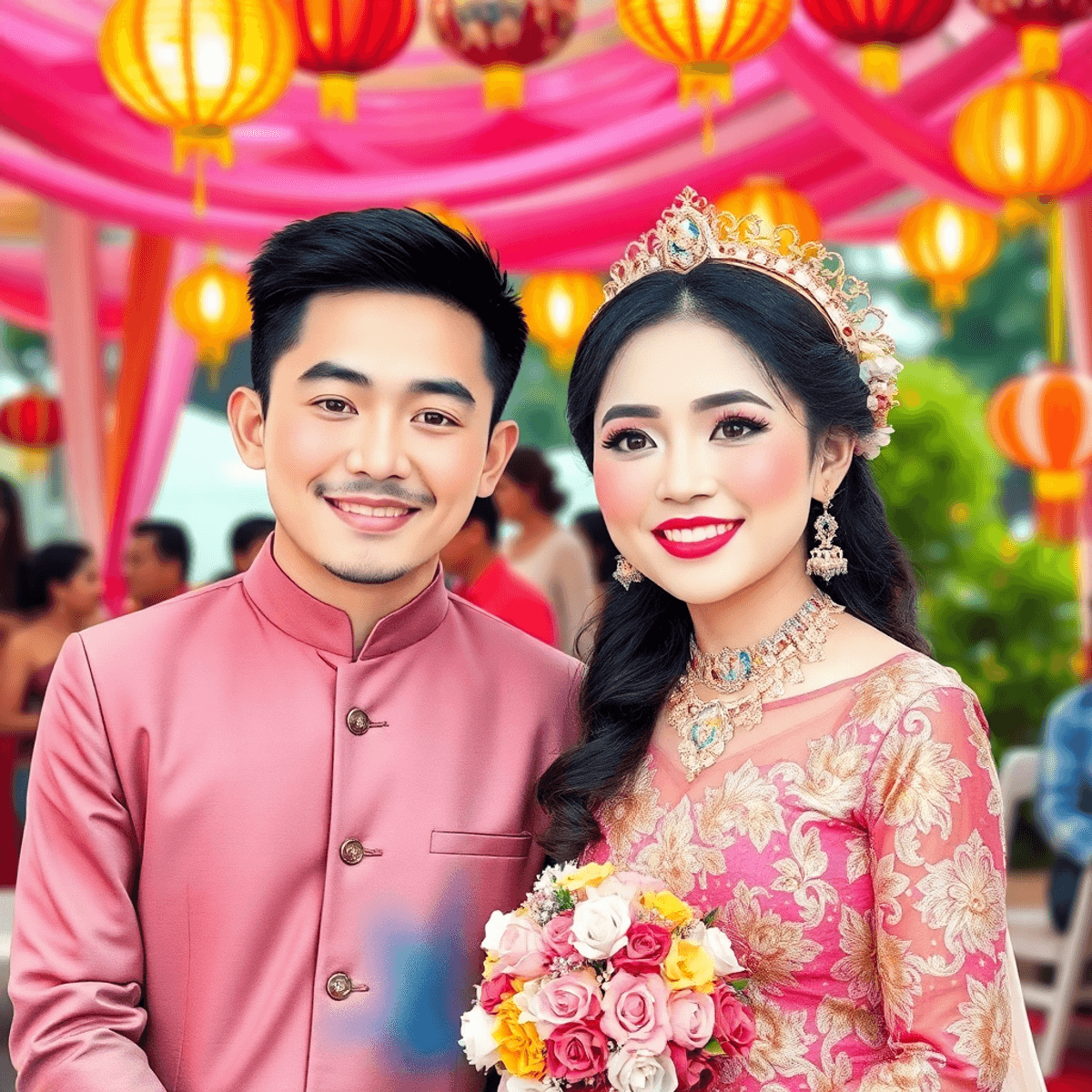
AI-powered face swaps have changed the way we capture and share memories. This is true at weddings, where people want to keep moments for a lifetime. With good face changer apps and Photoshop face editors, you can mix fun digital touches into real events. Now, you get both creativity and real-life feeling at the same time.
I had a fake wedding in Southeast Asia. In the wedding photos, my wife’s face and mine got swapped with faces of famous people from big cities by using AI face swap. This was more than just changing a picture. Teams in both countries did lots of work to make every step right. They wanted our faces and the other faces to look joined together with no errors.
Think about how bright and lively a normal Southeast Asian wedding can be with new, high-tech digital art mixed in. The faces of top influencers were used instead of ours in both photos and videos. It all felt out of this world and grabbed the attention, giving us a new story that went against usual wedding pictures. This shows the way face changer apps are now used for more than just fun. They now help reshape how people share their stories and culture.
This blog post looks at how AI face swap tech mixes with wedding ways in Southeast Asia. It shows how old customs and new ideas come together to give us something new and different.
Understanding AI Face Swap Technology
AI face swap is now a popular way to change and personalize pictures and videos. It uses machine learning to spot parts of the face, like expressions and shapes. You can put one face on another and it looks smooth and clear. It does much more than simple photo tools. The results feel real in photos and also in face swap videos.
How AI Face Swap Works
Detection: The AI starts by finding important points on the face like the eyes, nose, mouth, and jawline in both the face it will use and the one it will swap.
Mapping: The program matches these points. This way, the selected face can be changed in size, turned, and moved to match the target. The face also changes its look to fit the new head.
Blending: Special ways of blending get rid of sharp lines or skin colors that do not match. This helps the new face appear like it fits right on the body.
Rendering: In videos, this step happens for every frame so that changes look smooth as the head moves. The face swap keeps looking good during all the movement.
Popular Tools and Apps for Face Swapping
There are many tools out there, and you can choose the one you need.
Free Face Swap Online Tools: These websites let you swap faces without putting any software on your device. You can use them for photos that do not move, but sometimes the picture might not be very sharp or look natural.
Face Swap Apps: Apps like Reface or FaceApp help you swap faces in photos and quick videos. Most have a free option, but you might need to buy extras in the app.
Advanced Deep Face Swap Software: Tools such as DeepFaceLab and paid platforms like Galaxy.ai use smart technology to work with lots of training data. They make good swaps for long videos and tasks that need more skill.
Simple Face Changers vs. Deep Face Swap Applications
The main thing to look at here is how advanced the AI inside is:
Simple face changers use basic image overlay methods. They do not change things like the way someone looks or how the light falls on their face. These tools are quick to use but can look fake.
Deep face swap AI uses strong computer programs that learn how people's faces move, how their skin looks, and how light changes the feel of the face. This way, you get swaps that look very real and keep things like feelings and real face movements.
Machine learning is help in this area. It trains models with many faces. This is good for learning how face parts look at different angles and moods. The end result is a face swap AI that can make videos which look almost the same as the real thing.
Types of Outputs You Can Expect
Static photo swaps can be used with many free face swap online tools and apps. These swaps may not have much feel or realness.
Dynamic video swaps most often need stronger deep learning tools, so things look smooth from frame to frame.
You need to pick the right tool for your project based on several things. The quality you want, your budget (is it free or paid?), and if you or your team have the skills to handle tricky AI tasks all matter.
This use of technology paves the way for AI swaps to be seen in weddings. This is the place where old customs meet new ideas. It lets people mix tradition and the latest tech. The results often look amazing.
The Cultural Context: Weddings in Southeast Asia and Digital Trends
Weddings in Southeast Asia have deep roots in old customs. People there mix special rituals with big and lively parties. Many weddings last for many days. These times are important for the family. They are also events where people feel close to their community. Wedding traditions Southeast Asia have many steps like tea meetings, special clothes, and meaningful exchanges. Each country such as Indonesia, Thailand, Vietnam, and the Philippines has its own ways of doing this.
The Impact of Social Media on Wedding Traditions
The rise of social media trends has changed how people show and live these old customs. More couples now share their weddings on Instagram, TikTok, and Facebook. This makes their moments open for all to see and enjoy. The way weddings appear online shapes many things, including where events take place and what people wear. This brings together tradition and new looks.
Influencer Culture's Influence on Wedding Standards
Influencer culture has a big role in the way people see wedding photos and videos now. Influencers who live in places like Jakarta, Bangkok, or Manila share big and fancy wedding shoots. Many couples in the area start to follow these new ideas. Their high-quality content makes people want better photos and videos at weddings.
High-quality images that show real feelings and details
Creative video styles that feel like movies
Using popular songs and trending hashtags to get more people to notice
Cross-Cultural Digital Expressions in Weddings
Cross-cultural digital ways to show wedding moments start when two people are from different Southeast Asian countries or invite guests from other places, who share wedding memories online. This brings a mix, where ideas and signs from local culture blend with new ways to show and feel online. For example:
Traditional dance shows are filmed with drones to make things look more exciting.
Edits made by AI mix faces or make colors brighter to give very out-of-the-ordinary videos.
People work together online with influencers from different countries to help wedding brands or places get more attention.
These places where tradition meets technology show a new part in the story of Southeast Asian weddings. Here, people keep their culture alive and use new digital tools at the same time. Social media and online trends push couples to share their weddings with others. Now, weddings are not just family events but stories made for people who read and watch online.
This cultural background gives us a good way to talk about how AI face swap technology can be used in weddings. It can help people be more creative but also needs care with issues of who people are and how they feel about being shown. Food is also a big part of these celebrations and should not be missed. The food from each place adds its own flavors to the wedding fun. For example, Bangkok's culinary world brings together many tastes that are part of wedding meals. This brings the old and the new together, and shows how much our world has changed with new ideas and technology now.
Preparing for an AI Face Swap Wedding Experience
Making an AI face swap for a wedding is about good planning, and it starts with the quality of your images or videos. You need to use high-quality pictures and videos to get real and smooth results. It does not matter if you want to try a photo face swap or you want a hard video face swap free job. A clear image and good resolution will help you see a big change in how your result looks.
Gathering High-Resolution Photos and Videos
Use good cameras or phones with high megapixel counts to take wedding photos. Make sure there is good lighting so you do not get shadows or pixelation, since they can get in the way of how the AI works. Get several angles of faces. This helps the AI know more about the look, feel, and small differences in faces and expressions. If you want to swap videos, longer and steady clips help the final output look smoother.
Selecting Influencer Faces for Swapping
Picking which influencer to swap faces with is a fun and smart choice. Most influencers come from big cities. These spots are known for leading the way in online trends. You might want to ask yourself:
Which influencers fit well with your wedding style or look?
Do the influencer’s faces, smiles, and photo angles go well with yours?
Can you get enough clear and sharp photos of these influencers to help make good swaps?
This process can be hard for some people. Some influencer photos have rules because of copyright or privacy. There are also photos that do not look good when you swap them with your face.
Hand Workflow from Both Countries
When you have a wedding in Southeast Asian countries, you need to work together to get all the photos and videos:
Get media from both sides early – This also means asking local photographers for their files, and getting recordings from family and friends.
Keep formats and resolutions the same – This helps when you put everything on online platforms like face swap online or on tools like Galaxy.ai.
Talk about cultural preferences clearly – Some poses or faces may mean something different in each culture. It is good to respect these before you finish swapping images or videos.
Tools for Execution
Trying out apps like deep swap app or AI video face swap platforms helps you see different results. Many free tools give you simple swaps for photos. Paid versions often give better, clearer quality for both pictures that do not move and videos that do.
You might say, "I had a fake wedding in South East Asia and my wife’s face has been swapped with big city influencers," which shows how old customs meet new tools when you get media ready and choose the right influencer.
Step-by-Step Workflow of AI Face Swapping at a Wedding
Pulling off an AI face swap video or changing a face in a wedding photo or video needs careful teamwork. This is more true when the wedding is in two different countries that have their own cultures. The job needs the right touch with the tech side. It also asks you to be aware of what the wedding pictures mean to the people involved.
Coordination Between Countries
Establish Communication Channels: The teams or families from both countries need to talk clearly with each other. This helps with the sharing of good media and helps them agree on which influencer faces to use.
Cultural Sensitivity Checks: Some words, poses, or photos of influencers might mean something different in each place. Talking about these things helps people not feel bad without meaning to.
Time Zone Management: It is important to plan so that everyone can collect, work on, and look over photos and videos at the same time.
Gathering Source Material
Collect high-resolution photos and video clips of the couple and the main people in the project. Getting shots from many angles and showing different faces will help the AI get better results.
Get clear pictures or videos of the influencers you want to use for face swaps. The better these files are, the more the finished product will look real.
Utilizing AI Platforms Like Galaxy.ai
Platforms like Galaxy.ai focus on AI face swap tools. You can use these tools for both photos and videos:
Uploading Content: Upload wedding photos or videos and influencer face files into the platform.
Face Detection and Mapping: The AI finds main spots on both faces in your images or videos. It builds closeup face maps.
Face Replacement Execution: The system uses smart computer codes. It switches faces in each video frame or every part of a photo.
Blending Techniques: The platform uses skilled ways to match skin color, lighting, shadows, and face moves. This helps every change look real and natural.
Techniques for Seamless Face Blending
Color Correction: Matching the skin color between swapped faces helps to avoid big changes that might look odd.
Motion Tracking: In videos, tracking small head moves helps the new face move with recognized expressions.
Edge Smoothing: Making the edges between faces soft stops any sharp cutout or hard overlap.
Background Consistency: Keeping the background light and focus the same helps make the swapped images look real.
Managing Technical Challenges
If a face is partly covered by a veil, hand, or other item, you may need to use extra manual masking or editing.
When the influencer's picture shows the face at a different angle than in the wedding image or video, you may need to pick a new frame or take another shot.
A video with many pixeled spots can make the swap look worse. Use the first uncompressed files for best results.
This workflow brings together AI tools like Galaxy.ai and human checks. The team works to make wedding content that is right for each couple. They look at culture and try new things with the help of AI. This way, they mix classic wedding moments with creative digital touches.
Exploring Different Types of Face Swap Outputs for Weddings
When you use AI face swaps at weddings, the results mainly fall into two kinds. There are static photo swaps and dynamic video swaps. Each of these has its own good and bad sides. What you get can depend on your goal, how much money you want to spend, and the platform you like to use.
Static Photo Swaps
Photo face swaps from still pictures are easy to make with many free or cheap apps. You can get good results with only a few high-resolution pictures.
Photos let you make small changes to the lighting, color balance, and how faces blend together. You do not have to worry about any problems that come from movement.
Wedding albums, printed keepsakes, or profile pictures get better with edits that do not change. These edits show one perfect moment.
Many apps have free photo face swap tools. You do not need to spend much time learning how to use them. These apps are a good choice if you want fast results and do not want to pay for costly software.
Dynamic Video Swaps
Videos need steady face tracking across frames. This can make them harder to do, but it helps them feel more real and makes people feel part of it.
Videos show movement and faces that feel alive. This makes swapped faces work well. It is good for things like social media reels or wedding highlights that feel personal.
Some platforms let you use face swap video free or free video face swap features. But most of the time, there are limits. You may see watermarks, lower resolution, or time restrictions on what you can do.
Advanced tools like Galaxy.ai help you blend clips together easily. You can also make longer videos without losing quality. These tools are good for professional wedding videos.
Creative Output Examples
Short videos where the bride and groom have their faces switched with people who are famous. They are dancing at the wedding party or saying wedding vows.
Social media reels that mix several fast swaps with normal wedding video pieces.
Fun boomerang-style moments show how faces can change fast because of real-time face swap filters.
Photo collages mix new shots with photos that have been changed and not moving. This gives a fun look and feel to the whole story shown in the images.
Using both still images and moving videos lets you save many parts of your wedding. Pictures keep those big moments so you can look back at them any time. Videos show the feel and moods of the day. Free tools may be enough if you just want to share the memories. But paid apps can help you get much clearer and lasting results.
It’s good to know that face swap results may not all look the same. Some might not look very real, or the faces might not fit together well. So, it’s key to look at how good the final picture is. A few face swap techniques can give you better pictures than others. This matters a lot if you want the pictures to keep the natural look of people in them.
Ethical Implications and Privacy Concerns Surrounding AI Face Swaps at Weddings
Using AI to swap faces with influencers at a wedding comes with some big ethical and privacy problems. When I took part in a fake wedding in Southeast Asia, my spouse’s face and my face were swapped with faces of famous people from the city. This made these worries feel very real. The digital privacy for people in this, or those whose pictures get used, needs to be treated with care. ethical and privacy challenges
Consent Issues
Influencers’ faces are out in the open, but that does not mean you can use them for your own work without asking first.
If you use someone’s look without their clear yes, you can run into hard questions and maybe break the law.
Even if you get pictures of influencers from easy-to-find social media accounts, if you want to use them in your own work or to make money, you need to get clear consent agreements.
When weddings happen across borders and have people from more than one place, the hand workflow must be set up in a way so everyone knows and agrees to how the AI face change will happen.
Risks of Digital Identity Misuse
AI-generated swaps can be changed or used outside the intended situation. This can damage someone’s name or show them in a wrong way.
In Southeast Asia, ideas about identity and pictures are different from place to place. What is fine in one country might be a big problem or even upsetting in another.
Fake images or videos made with face swaps can spread wrong information without people knowing it. They can also be used in ways that hurt others.
Looking after digital identities needs more than just tech tools. It also means you have to respect cultural rules about privacy and how people are shown.
Practical Considerations for Ethical Use of AI
Transparency is key. Let everyone know how their images will be used and edited.
Make sure you have say over the final outputs. This helps stop others from using them in the wrong way after sharing on social media sites.
Safe storage for the first and changed files helps lower risks from others sharing them without approval.
Both countries’ teams working on the wedding content need to check laws with legal reviews. These should focus on digital privacy for both areas.
The job is more than making content that looks good. It's important to protect people’s privacy online and follow rules for what is right or wrong. This way, mixing old customs with new technology makes weddings better for everyone and does not make things harder. We need to know that these ethical implications are not just ideas on paper. They have effects in real life that we all have to think about and handle well.
Personal Reflection on My Experience Swapping Faces with Influencers at My Wedding
I started using personal story AI wedding because I was both curious and unsure. Before our wedding, I took a lot of time to pick the faces of influencers to swap with mine and my spouse's. It was strange to know that our normal ceremony would now have this new thing added in. I felt excited about it, but also a bit worried. I didn’t know how our families would feel when they saw us turned into well-known people from big cities.
On the day of the wedding, when the AI face swaps began to work, many people felt strong emotions. It was funny and warm to watch faces change into those of influencers. The mix of tradition and new things gave us moments that were both fun and full of meaning.
Reactions varied widely:
Family members said they were surprised. Some people were confused at first, but then they got very interested in how the technology worked.
Close friends thought it was really funny. A few joked that we should have all our future events in "influencer mode."
Social media followers took part and joined the talk. They started chats about being creative, who we are, and the use of digital culture in weddings.
Sharing these unusual moments online got many mixed responses. Some people felt amazed by new ideas. Others wanted to know more about how the memories fit into their culture. This experience showed how AI can make memories feel more personal. It also showed that AI can push people to think differently about what is normal.
Looking back now, the trip with feelings was like a bridge between different ages and cultures. It mixed digital art and real traditions. The experiment made me feel more thankful for how new tools can help us tell stories at big times in life, but still let us have true connections with others.
The Future of Weddings with AI Integration: Embracing Technology Responsibly While Respecting Cultural Roots
The world of future weddings technology is moving fast now. Picture this scene: You and your partner use VR to be with guests no matter where they live. You feel like you all are in the same place. With help from smart tools, couples can make weddings feel special. These can mix in old family customs with new, creative ways to share their story.
Here are some new things that are now shaping how people have wedding celebrations:
Virtual and augmented reality let people join from far away and still feel close to others.
Advanced AI tools can swap faces or switch styles while the live stream is happening.
People from different places work together, and the digital content fits with their wedding customs.
Better teamwork from both countries helps to keep old rituals and new tech working smoothly together.
My time at a fake wedding in Southeast Asia showed me both the good and hard sides of new ideas. My wife and I had our faces switched with faces of top city influencers. A project like this needs good planning. You have to collect the main photos, keep in mind respect for local ways, and talk clearly with everyone.
You have a lot of power when you use AI in big moments in life. Here are some good ways to use AI:
Make sure you get permission from every person shown.
Think about how privacy works in your culture.
Try to keep your ideas fresh, but also show respect for old ways.
Using AI at weddings can bring many new ideas. But, people need to use it in the right way to keep all that is special about the day. Each wedding has history and meaning, and AI can help—but it should be used with care.
FAQs (Frequently Asked Questions)
What is AI face swap technology and how is it used in weddings?
AI face swap lets you use machine learning to replace faces in a photo or video. At weddings, people can use this to make digital moments by putting the couple’s faces on well-known people or other faces. This brings old wedding ways and digital ideas together in a fun, new way.
How does influencer culture impact wedding photography in Southeast Asia?
Influencer culture has a big impact on wedding photography and videography in Southeast Asia. Couples like to follow social media trends, and they use digital styles in their wedding photos and videos. This mix helps make wedding stories easy to follow and nice to see. People also use new ways like AI face swaps to get more attention online.
What are the key steps to prepare for an AI face swap wedding experience?
Preparation means getting good-quality pictures and videos. This helps AI work well. You need to pick the right influencer faces to swap by thinking about how they look and what fits in that place. People in different countries need to work together to mix old ways with new digital ones easily.
What ethical considerations should be kept in mind when using AI face swaps at weddings?
To use this the right way, you must get permission from people whose faces you show. You need to care about digital privacy rules. It is also important to think about how this may feel for people in places like Southeast Asia. When you use it carefully, you can stop people from taking digital identities in a bad way and you show respect for everyone.
How do static photo swaps differ from dynamic video swaps in wedding content creation?
Static photo swaps are when you change faces in pictures that do not move. You get simple and creative results with these. Dynamic video swaps are for video. Here, faces move and the clips feel lively. This is good for making fun videos or reels for sites like Instagram and TikTok. Both ways are good. Each one depends on what story you want to tell or how you want your pictures or videos to look.
What future trends might we expect in weddings integrating AI technology?
Future weddings might use smart AI tools like virtual reality, real-time face swapping, and digital experiences made for you. The new ideas could make wedding celebrations better. At the same time, people should remember to use them in a good way, so they still respect family customs and important times in life.


Comments
Post a Comment